The Digital Reader

The Best News and Info on Ebooks and eReaders

The Digital Reader header image 2

Ads in eBooks Are a Good Thing. Deal with It.

April 20th, 2011 by Joe Wikert · 11 Comments · opinion

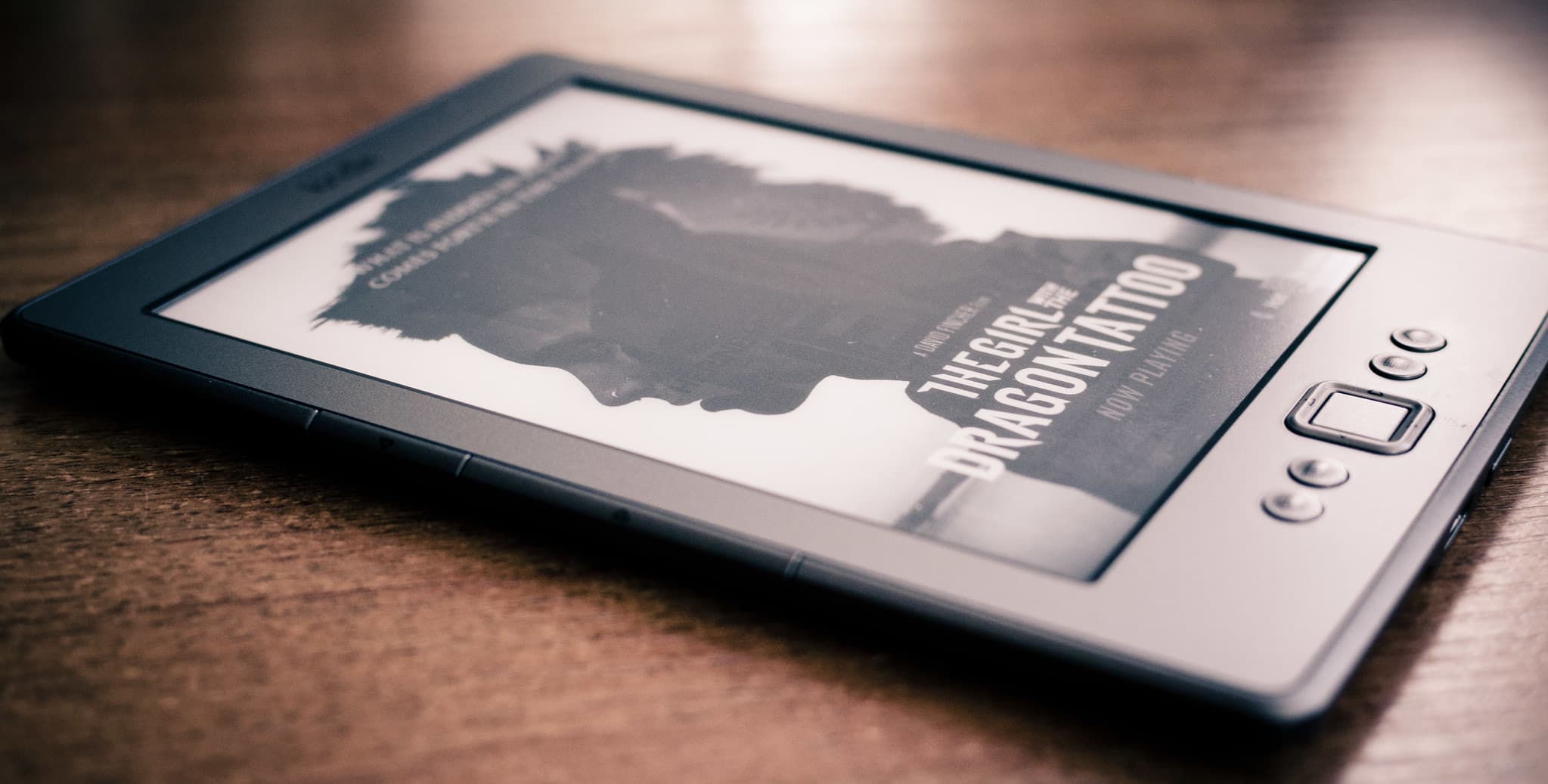
Kindle Ads Amazon is introducing an advertising component to the Kindle platform.  I love it.  Kudos to Jeff Bezos & Co. for their forward thinking on this initiative.  I’m talking about the less expensive ($114) device currently known as “Kindle with Special Offers & Sponsored Screensavers.”  (It’s not the sexiest name but it certainly describes the product!  Still, I wonder what Apple would have named this…)

I’ve blogged before about how advertising and its close cousin, sponsorship, will take on a larger role in the ebook world and most people have criticized that logic.  They say “books aren’t magazines”, “the book reading experience needs to remain free of ads”, blah, blah, blah.

Why?  What makes books so special?  More importantly, who’s to say there can’t be two flavors of a book?: One without ads (higher-priced, for purists) and one with ads (lower-priced, for everyone else)?

Before I get too far ahead of myself, I need to point out that what Amazon introduced with this new Kindle isn’t what I’m describing.  They’re not talking about including ads in books.  Yet.  At this point, all this new device offers is a slighly lower price ($25 less), periodic offers from Amazon (e.g., a discount on an Amazon Gift Card) and “sponsored” screensavers.

Wait a minute.  I recently bought a $139 Kindle without Special Offers & Sponsored Screensavers and now I feel gypped.  So I paid $25 more and I won’t get any of these nice discounts Amazon plans to offer owners of the new Kindle?  That stinks.  I wonder if they’d let me opt in after the fact.  Seriously, this makes no sense.  They should let all Kindle owners opt into this program, not just the ones that paid less than the rest of us.

I know prices are always subject to change but I really wish Amazon would have initially priced this new device at $99 or less.  As soon as the Kindle gets below $100 they’ll have a mass market hit on their hands.  I can’t believe I’m saying that, particularly since I gave up on the Kindle a year ago.  Amazon has done some smart things since then though and this is just one example.

Don’t think this new Kindle is the furthest Amazon plans to go with ebook advertising though.  They’re playing it smart by taking one small step at a time.  There’s no point rushing into this, but one day ads will be presented as splash screens when you open an ebook and even somewhere on the screen as you read.  It’s OK.  The world isn’t going to stop spinning on its axis when this happens.  We’ll all be fine.  In fact, this model will put more content in front of more people than could have been reached without advertising.  That’s a good thing.  And if you want to pay more to avoid ads I’m sure that option will exist (just like it does today, where you can pay $25 more for a “regular” Kindle.)

Here’s where it all gets very intriguing: Will Amazon (and other retailers) compensate authors and publishers for this advertising/sponsorship income?  I’m not convinced they have to, but think about the revenue-sharing models this could present.  Amazon could ask for additional discount points from a publisher and offer that publisher a cut of the advertising/sponsorship income.  Interesting.

reposted with permission from Joe Wikert’s publishing 2020 blog

Tags: ·········

11 Comments so far ↓

  • karen wester newton

    I believe Amazon is calling the ad-supported Kindle the Kindeal.

  • MikFinkel

    I want MY ereader to show what I put in it not what corporate types want to put in it. I willingly will pay $25 more for an ereader without commercial info. Enough already. Do we need info splash everywhere? 24/7/365? If it comes to it where it will be there no matter what, there is always paper books to go back to.

  • Sweetpea

    I wholeheartedly agree with MikFindel. I’d prefer to pay more for less ads.

    I pay extra money to watch my movies without ads (by buying the DVD instead of watching it on TV), so why would I want to watch those ads in my books?

  • idi

    So we agree that there should be 2 options :
    -With Ads
    -Without Ads
    (-Ads with books in it) <=3rd opt

  • Format C:

    Here in Italy, low price paperbacks have ads (for the publisher) in the last few pages. Also, the list of other books by the same author at the beginning of the book is actually an ad.
    And some of them even include the first chapter of new books from the same author/publisher/franchise, so nothing new, I reckon…

  • macsnafu

    Considering that I’m not especially interested in reading the latest books, I’m not sure why I would want to see the ads. I’m mainly going to use an e-reader for free books from Project Gutenberg, Mises.com, and other such sites with older texts.

  • LCNR

    “What makes books so special?”

    Besides the fact they’re one of the last things I can have without ads, I believe books should not be treated as any other consumer good. Although I don’t think the book as an object is sacred — I have fully switched over to digital, after all, though I still love and buy p-books –, I do think the _content_ is, somewhat; that the author’s work deserves better than being used to such commercial ends and that we should be able to devote ourselves to reading it without being constantly distracted by ads — the world around us is distraction enough. (I also strongly believe in the “cultural exception” principle.) In the same way, there’s a difference between an ad for a book in a book, and a purely “commercial” advertisement, Format C:. And then there’s the fact, as MikFinkel points out, that advertising is everywhere else, so oh no, not books, too.

    Call me naive, I believe in — or rather, I wish for — a world where we’re not constantly bombarded with advertisements. I hate (non-cultural) advertising, especially as it’s so invasive and getting more so all the time. So I get rid of it whenever I can, or else I try to ignore it or, better still, thwart it. For instance, I make a point never to click on a GoogleAd-sponsored link; I use Instapaper, Readability, Readable, DotEPUB — nifty little programs that get rid of everything that isn’t the content I want to read.

    If ads ever get into books, first of all I will not buy such books as long as there are publishers who have not sold out (same way I now only buy books from publishers who offer DRM-free books — and if the reports are to be believed, they’re not going away anytime soon). I don’t care if that means paying more because the book isn’t subsidized; can’t we do anything without yielding to our baser commercial instincts? (And anyway, there are already loads of very affordable — even recent — e-books around, and I’ve read several articles, including on this web site, arguing that the best e-book price point for sellers is also a pretty cheap one for buyers, and they didn’t compute in ads.) And if there should come a time when only ad-loaded books are available, well, the thought just popped into my mind as I was reading the article: I think I’ll turn pirate and buy books, strip them of (DRM and) ads, and share them (with a recommendation to donate to the author, maybe) with those who’ve had enough and would like to be able just to sit
    back and enjoy the author’s content. Just the content, no “cheap” distractions. Just the content, people.

    LCNR

  • LCNR

    By the way, Mr Wikert, I’m sure Amazon will be very pleased when they read your post: you’re actually _begging_ them to keep throwing ads at you and pushing you to consume more and more all the time (from them only, of course — see below). They’ve certainly thought this new step through carefully, so if they are offering the Kindle for less, I believe that’s because they
    think they’ll get their money back somewhere down the road, probably sooner than later, and somehow I don’t think they really mean for you to profit from it, too, or do you really think big corporations have your best interests at heart? :-) Anyway, that’s your choice — as long as it remains a choice, which unfortunately is far from certain — but I know I’d rather miss a few opportunities rather than be force-fed compulsions to buy all the time. (It’ll probably turn out to be cheaper in the end for me, too; that’s the problem with or, from the corporate point of view, the beauty of special offers: for fear of missing a good opportunity, there’s a good chance you’ll end up systematically jumping at them).

    And of course, there’s another, underlying issue with Amazon, and that is that they are promoting a proprietary format in a closed ecosystem, so not only is this not consumer-friendly (see cross-platform, see DRM, etc.), the more you buy from them, the more reason you will have to buy only from them, and I’m sorry, but that isn’t good: you should buy from a company because you value their goods or services, not because you’re tied in by what you’ve already bought. Though I will concede their tremendous contribution to the development of the e-book market, Amazon’s (and other companies’) unwillingness to work with others is always harmful to consumers in the end. (Note that I’m not saying share everything, just be a sport, such as adopt an open standard* that allows cross-platform compatibility _without_ a Kindle app.)

    LCNR

    * Hey, that could be the next IDPF campaign: a picture of a cute EPUB with a sign “Adopt an open standard”. :-)

  • THRILLED by the thought of ads!

    LCNR said:
    “What makes books so special?”

    Besides the fact they’re one of the last things I can have without ads, I believe books should not be treated as any other consumer good

    When ebook readers want ebooks to cost 99 cent and $2 they usually have no problem comparing them to other consumer goods or products (even though I’m not really sure what you mean by GOODS. Goods means like “beans” & bread in a supermarket to me) like iTUNES, a pack of gum, or a burger from the dollar menu.

    When it’s convenient you compare it to other consumer goods. When it ceases to be convenient, suddenly books are special.

    AS an author I am THRILLED by the thought of ads! Extra, much needed income. If it pushes consumers back to paper they still pay the high, premium prices they came to Kindle to avoid, so it’s a win-win for authors & publishers regardless.

  • shadaik

    What do you mean, books are ad-less? That’s actually a recent development, books used to be full of ads on the last few pages. The cheap ads you may still know from pulp mags and comic books, advertising X-Ray glasses, body building lotions with Arnold Schwarzenegger presenting them before he became an actor and the like. Also, ads for other books by the same publisher (which still is common).

Leave a Comment